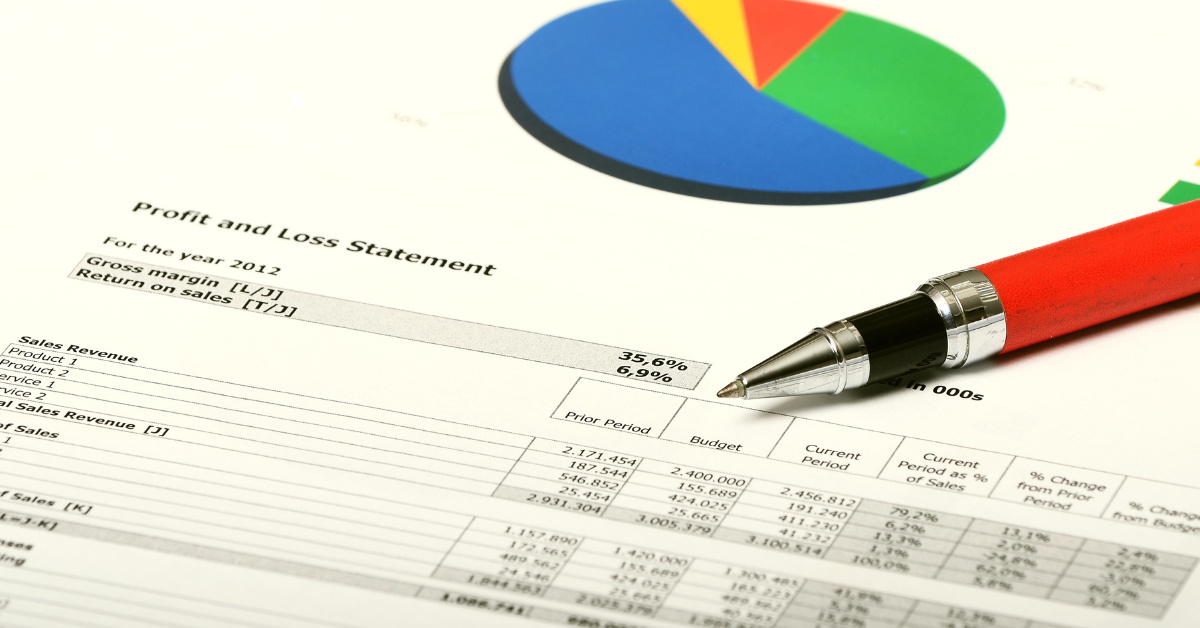
As a freelancer, you’ve likely asked yourself the question: “Am I actually making money?” The answer lies in your Income Statement, often called a P&L or a profit and loss statement. Think of it as your business’s financial health report, providing a snapshot of your revenue, expenses, and ultimately, your net profit over a specific period. It’s the direct line to understanding your financial performance.
Income Statement, P&L, Profit & Loss: What’s the Difference?
These terms all refer to the exact same financial report. They are interchangeable ways to describe the document that summarizes your business’s income and expenses over a set period, revealing whether you’ve made a profit or incurred a loss. Don’t let the different names add to the intimidation; they’re all tracking the same crucial information.
The 3 Core Ingredients: Revenue, Expenses, and Your Bottom Line
Every P&L for freelancers breaks down into three fundamental components:
- Revenue: This is all the money your freelance business brings in before any expenses are deducted. For a graphic designer, this might be payment for a logo design project. For a content writer, it could be income from articles delivered.
- Expenses: These are the costs you incur to run your freelance business. Examples include software subscriptions, client entertainment, internet service, or professional development courses.
- Net Profit (or Loss): This is your “bottom line”, i.e. what’s left after you subtract all your expenses from your revenue. If revenue exceeds expenses, you have a net profit. If expenses are higher, you have a net loss. This figure tells you how profitable your business truly is.
Why Freelancers Need a P&L
Many freelancers mistakenly believe that a profit and loss statement isn’t for them, assuming it’s solely a tool for large corporations. This couldn’t be further from the truth. For a solopreneur, your P&L is a personal business tool, offering direct insights into your financial well-being and strategic direction.
Busting the Myth: Why Many Freelancers Overcomplicate Their Finances
It’s common for freelancers to feel overwhelmed or intimidated by financial statements. This “P&L Paralysis” often stems from a misconception that finances are inherently complex or require an accounting degree. However, by reframing the P&L as a friendly guide rather than a judge, you can unlock its power.
Your P&L as a Cash-Based Compass
For most freelancers, managing finances on a cash-basis is the simplest and most practical approach. This means you record income when you receive it and expenses when you pay them. This contrasts with accrual accounting, which records income when it’s earned and expenses when they’re incurred, regardless of when cash changes hands. For the solo operator, cash-based accounting for your P&L provides a straightforward and accurate picture of your actual cash flow, which is vital for daily operations.
Reading Your P&L
This is where your P&L statement truly shines, it’s not just a collection of numbers, but a dashboard for informed decision-making.
Pricing Power: How Your P&L Reveals What You’re Worth
Your profit and loss statement explained through the lens of pricing helps you understand if you’re charging enough for your services. By seeing your total revenue against your costs, you can assess your profit margins. If, for instance, your net profit margin is consistently low despite high revenue, it could signal you’re underpricing your services or your expenses are too high relative to your rates.
Spotting Expense Leaks: Optimizing Your Spending & Increasing Profit
A detailed look at your P&L allows you to identify where your money is going. Reviewing expense categories helps you determine which are essential for growth and which might be “leaks.” Ask yourself: Is this software subscription still necessary? Am I getting a good return on investment (ROI) from this marketing expense? By optimizing your spending, you directly increase your net profit.
Future-Proofing: Better Tax Estimates and Savings
One of the most significant benefits of a clear P&L is preparing for taxes. As a freelancer, you’re responsible for self-employment taxes, which are 15.3% of your net earnings (onpay.com). Your profit and loss statement clearly shows your net earnings, allowing you to estimate your quarterly tax payments accurately and set aside funds. This proactive approach helps avoid surprises and potential IRS penalties.
Your Simplified P&L Checklist
Monthly Pulse Check: Quick Snapshot for Course Correction
Every month, dedicate a short time to a quick “pulse check” of your P&L. Focus on these key metrics:
- Total Revenue: Is it on track with your goals?
- Top 2-3 Expense Categories: Are these expenses reasonable and necessary?
- Net Profit: What’s your actual take-home for the month?
Ask yourself: “Is my income where I want it to be? Are there any unexpected expenses I need to address?”
Quarterly Deep Dive: Strategic Adjustments & Growth Planning
A quarterly review allows for more strategic analysis and planning. Compare your P&L data over the past few quarters and try to answer these questions:
- Total Revenue: Is my revenue trending up or down seasonally? Are new services impacting it?
- Gross Profit Margin: Am I effectively pricing my services to cover direct costs?
- Net Profit: Is my overall profitability stable, improving, or declining? How does this impact my savings?
- Top 3 Expenses: Have certain expense categories grown unexpectedly? Are they still yielding ROI?
By identifying trends, you can make informed decisions about your pricing, services, and growth strategies for the coming months.
The Freelancer’s “No-Sweat” P&L Approach
Managing your income statement and other financials doesn’t have to be a source of stress. The right tools can simplify the process significantly.
Manual Tracking vs. Automated Bookkeeping
Deciding how to manage your P&L depends on your comfort level and time.
| Method | Pros | Cons | Ideal For |
|---|---|---|---|
| Manual (Paper/Spreadsheet) | Free, full control, basic understanding | Time-consuming, prone to errors, easy to fall behind | Very low volume, strict budget, hands-on preference |
| Automated Bookkeeping | Saves time, reduces errors, automatic categorization, tax-ready reports, up-to-date P&L | Subscription cost, initial setup may require attention | Busy freelancers wanting clarity and tax-readiness without being an accountant, project-based income, varied expenses |
For freelancers seeking to bypass manual spreadsheets and complex traditional software, AI-native platforms like Fyno offer an intuitive way to track income and expenses. These platforms automatically categorize transactions and generate an up-to-date P&L for freelancers without needing expert accounting knowledge. This makes tax-readiness and strategic decision-making much simpler, moving you from chaotic tracking to clear insights.
Leave a Reply